


Filed under: Altithermal, book, Hot Earth Dreams, Speculation | Tags: California High Altithermal, climate change, Hot Earth Dreams
Part 1 of this series can be found here. Part 2 can be found here.
For Part 3, I want to start with two numbers: 2,644,443 and 200,000-300,000. The first is what I predict, based on the formula in Hot Earth Dreams, would be California state population in 2100 CE, and I’ll get to how I calculated that in a second. The second is the estimate of how many Indians lived in California before European contact. The first I calculated by finding out California’s current population (rounded up to 39,000,000), it’s current annual growth rate (0.9%), and plugged the numbers into a compound interest equation and ran it out to 2050 (52,888,867. Please check my math). Then I applied the 95% dieoff from civilization collapsing between 2050 and 2100, and came up with a population of 2,644,443. The thing to notice is that this number is still ten times higher than what the state supported before Europeans came along. It’s also almost twice as high as the state population in 1900 (1,485,053), which suggests to me, sadly, that the scenario of a 95% population crash is probably too optimistic for California.
Filed under: Altithermal, book, climate change, Hot Earth Dreams, Speculation | Tags: California High Altithermal, Hot Earth Dreams
One of the things that bugs me is that, about half the time when I dawdle on writing something, new facts emerge that change everything. That’s happened here a bit.
This is part one of a series of blog posts about California in the High Altithermal, and here I’m focusing on the environment. What I’m doing is taking the ideas from Hot Earth Dreams and working to show what might happen in one specific spot, in this case, the area currently defined as the state of California, over a specific time period, in this case, the High Altithermal.
My goal is to show how climate change happens over time, because different things happen on different scales, and that makes the future a lot messier. It’s not meant to scare people, but rather to give us a way to intellectually examine this model of the future, and figure out how people and other organisms will adapt.
If you’ve already read the book, you know the basic global scenario for the High Altithermal, which will run from 2100 CE (when our greenhouse gas emissions from fossil fuels stop) to 3600 CE (when the East Antarctic ice sheet finishes melting, and sea level tops out at 65 meters above the current level). These dates aren’t hard: we don’t know when we’ll finish binging on fossil fuels, what Arctic methane is going to do, or whether or even if the entire East Antarctic ice sheet will melt. But that’s the scenario I’m using here. During the first 200 years of the High Altithermal, global average temperatures climb from +3oC (we’re currently at +1oC) to +8oC, and the Greenland and West Antarctic ice sheets melt, raising sea levels by about 16 meters over those 200 years. From 2300 CE on, global average temperatures stabilize, and then start to fall 1-2oC over the next 1,300 years, while the sea continues to rise as the East Antarctic ice sheet melts away.
In this post, I’ll cover sea level rise, climate, and rivers and dams. This is necessary background, and I’m breaking it up into multiple posts so you don’t have to read a 7,000 word essay.
Filed under: alt-future, climate change, deep time, futurism, Hot Earth Dreams, Speculation, Uncategorized, Worldbuilding | Tags: alt-future, Deep Future, Hot Earth Dreams
Actually, as a thought experiment, I started playing with what California might look like in the High Altithermal, from about 2100 CE to about 3600 CE. It’s more complicated than I’d initially thought, of course. If it’s something you’re interested in, contribute your ideas in the comments, and I’ll work them (or some of them, anyway) into the next blog post or two.
In the meantime, here’s a future that I’m pretty sure won’t happen. The idea is that US history will parallel Roman history, with the eastern US playing the western Roman empire, Washington DC playing Rome, and the western US playing the Eastern Roman Empire.
I gave an overview of the transformation of the Roman empire in Hot Earth Dreams in Chapter 17, and the idea is that the Roman Empire proved ungovernably large, and Rome proved ungovernably corrupt, so Constantine moved the seat of power to Constantinople around 330 CE, and his sons split the empire into the Eastern and Western empires. The western empire collapsed in 476 CE, while the Eastern empire transformed over time into the Byzantine empire and survived until 1453 CE.
Following this analogy over-faithfully, the US capitol moves west as the (south)eastern US is devastated by increasing heat, black flag weather, rising seas, and the collapse of civilization in the face of such disasters. In this case, they move the capitol ultimately to perhaps Portland, although someone might argue that Fairbanks or somewhere near Anchorage might be a better site. Washington DC gradually falls into ruin before being swallowed by the Atlantic, and what’s left of American culture shifts west, while statelets in the east fight over who gets to rebuild America.
Culturally, Byzantium wasn’t Rome. They were Christian, spoke Greek, and practiced Medieval-style warfare. In this alt-future, we can mimic the same shift by, um, let’s see, having western Americans speaking Spanish or Spanglish (except when reading law and science, which would be in English), and mimicking the feudal social structure with something like an unholy mashup of drug cartel culture and west coast capitalism, with CEOs instead of counts and Cartel leaders instead of dukes. Since a lot of feudalism came from Rome adapting the culture of the migrating tribes of Celts and Germans, this isn’t entirely as stupid as it sounds. “Celts” as a group were probably as polyglot as today’s Latinos are, and had to experience similar levels of prejudice within the Roman Empire (for example, having red hair in Rome was probably akin to being black in America). Note that I’m not implying that today’s Latinos are in any way barbarians, nor that the drug cartels are the best that Latino culture has to offer. I’m more thinking of what is a Latino analogy to the old Celtic and Germanic warbands. If you think that Latino culture has something better and more resilient to give to the future, let me know in the comments.
In any case, if the USA broke down somewhere in the 22nd century, then the Western American Empire (“Alta Mexica?”) might last for another thousand years.
Now I don’t think the US will replay Rome, so this scenario is presented as a bit of a spoof of the idea that US history will mirror the history of the Roman Empire. It looks like it could, just maybe, work, so if anyone wants to use it in a story, please be my guest. If you’ve got anything you want to contribute (comments or ideas), please share those too.
Now that I’ve got that scenario out of my brain, in the next blog entry (or three) I’ll look at California in the High Altithermal, Hot Earth Dreams style, with temperatures spiking over the next ~300 years, sea levels rising over the next ~1600 years, civilization and populations crashing, and everything migrating. How long might the US hold together, will it fragment, what happens with Mexico, and all that are questions that need to be answered, along with lifeways, transportation, where the settlements are, and so forth. If you’ve got ideas, put them in the comments, and let’s see what we can come up with.
Filed under: colonizing space, deep time, futurism, Hot Earth Dreams, livable future, Real Science Content, science fiction, Speculation, sustainability | Tags: Interstellar Travel, science fiction, Speculation, sustainability
I came across this little bit when listening to NPR’s On The Media. The episode is entitled “Digital Dark Age” which of course pricked my ears up immediately, as the digital dark age is something I dealt with in Hot Earth Dreams. The whole hour is worth listening to, but the weird idea I wanted to focus on is the idea of using artificially generated DNA for long-term data storage, an idea put forward by Dr. Nate Goldman in this segment.
Superficially, this is a great idea. Dr. Goldman is working on this idea as a way to store the huge amount of genomics data he has to curate at the European Bioinformatics Institute. DNA is pretty stable and information dense, so if it’s possible to cheaply generate long DNA sequences and to cheaply read them, it’s a good form of ROM (Read Only Memory). Dr. Goldman develops this into an idea of caching the great works of civilization in some sort of time capsule that starts by explaining what DNA is and how the code works, then progresses to simple decoding examples, and finally to the whole earth encyclopedia, or whatever is supposed to be in the data cache. DNA is certainly more durable than known electronic digital media and is smaller than durable analog media like baked clay tablets, so superficially it has a lot going for it.
One little problem with this scenario is the idea that it’s easy to generate and read DNA. It’s easy now, but I remember how hard it was even 20 years ago when I was in grad school. This is a new technology. Indeed, Dr. Goldman doesn’t think this technology will be financially viable for another decade or two, although it’s borderline technologically viable now.
Still, DNA ROM works better if we’re talking about a hypothetical sustainable civilization, as opposed to leaving some sort of time capsule for the next civilization 5,000 years from now or whenever. DNA is not the kind of storage medium that will allow people to jump-start civilization from a hidden cache. It’s just too tricky to read and write, even though DNA has demonstrably lasted tens of thousands of years in fossil bones under ideal conditions.
It’s even more suitable when we’re talking about interstellar colonization, where information needs to be stable for thousands of years. Not only can the genomes of potentially useful organisms be stored as DNA, all the other information the starship needs to curate can be stored as DNA as well.
The other little problem with using DNA to store data is that having such technology widely available means that high-level synthetic biology will be available to anybody who wants it. After all, if the equivalent of a laptop can generate as much DNA as your average genome, how many more bits of equipment are needed to twirl that DNA into chromosomes, insert it in a cell, and make a new eukaryotic life form? Letting this kind of technology be available to the public is something that is currently forbidden, at least in current American society. What kind of societal changes would required for people to believe that such technology is safe?
Still, it’s another possible technology for a hypothetical sustainable and starfaring civilization. Perhaps in the future, we’ll have computers that are as much biotech as chips, where spam is something you feed your machine to support its self-repair function, rather than something you delete from your inbox.
Or maybe we should try to baked clay tablet thing…
Filed under: 2016, climate change, Hot Earth Dreams, Speculation | Tags: News Year's predictions
Happy 2016 everyone!
Here’s what I hope will happen in 2016: COP21 will take force; entrepreneurs worldwide will realize there are fortunes to be made in shifting the world towards sustainability; Big Oil companies will be indicted and sued over their knowledge of climate change and actively suppressing public action on that knowledge, and we’ll finally get on with trying to adapt.
Why not be optimistic?
Actually, I’ll be really interested in seeing what happens to the COP21 agreement in the US over this presidential campaign year. If it disappears without a trace, that will be bad.
One tedious 2016 problem is that the mainstream American media will undoubtedly focus the vast majority of their attention on the 2016 campaigns, and for good reason: thanks to the Citizen’s United ruling, there’s a huge amount of potential ad revenue out there for them to suck up. Perhaps I’m pessimistic, but I can’t see them getting away from the inane “politics as a horse race” for the next 11 months. We’ll have to watch the second-line and international media to see what the Obama administration, states like California, and the megacorps do (or don’t do) to implement COP21 or otherwise deal with climate change. Hopefully, the rest of the world will be less caught up in the Trump/Clinton supermarathon, and rather more interested in deep decarbonization.
In other news, I suspect the weather will get more chaotic, and a lot of people will suffer. My take on the changing weather is that it’s sort of like the random wandering monster encounter tables from the Old Dungeons and Dragons. This dates me horribly, but remember those tables, where you rolled a d20 to see whether orcs or a gelatinous mass turned up? (My apologies if someone thinks those two are political references.)
What global weirding of the weather is doing is shifting the probabilities in the weather encounter table. Things like cold, dry weather are getting less common. Hot weather is getting more common, as are wet weather and hot, wet weather. The thing is that the encounter table hasn’t yet changed, just the probabilities for each event. Thus, the denialists can claim that the storms of last week are just “normal Texas weather” or similar, while climate alarmists like me can say it’s global weirding, and we both look right to our friends. A shift in the probabilities isn’t a shift in averages, at least at first.
Still, extreme climate change would turn most of the Mississippi River basin tropical, more like the current Amazon. When you look what the current storms are doing to the area, you can kind of see how it might get there, with increased floods in the winter and possibly in the summer (depending on hurricane tracks) and increased heat in the summer. It’s not a pleasant vision.
But still, I’m a pessimist, so tonight I’m pessimistic about my pessimism. Maybe we’ll see some positive action in 2016. I’d like nothing better than to publish a book called Pleasantly Disappointed in 2025, and talk about how all my predictions in Hot Earth Dreams were wrong.
What are your predictions for 2016?
Filed under: deep time, futurism, livable future, Speculation, sustainability | Tags: Deep Future, locusts and grasshoppers, outbreaks
This is an idea I played with near the end of Hot Earth Dreams, and since it’s the end of the year, I figured I’d post it here for you to contemplate in whatever quiet times you have around the holidays. Full disclosure, I posted an earlier version of this thought over on Antipope (post #1565 in an epic thread!).
This has to do with species that are capable of outbreaks, such as the grasshoppers that can, under the right circumstances, become locusts. In overly general terms, a species in an outbreak goes through what ecologists call “enemy release”–a population’s numbers grow faster than its enemies (predators, parasites, and pathogens) can kill them off. Species that undergo outbreaks can be things like grasshoppers and locusts. The category certainly includes invasive species that have outrun their enemies (think gypsy moths, rats, tamarisk), but even native species can undergo outbreaks, and there’s a whole history of species (like lemmings) that go through booms and busts, because they reproduce faster than their predators, and when predator numbers increase, their populations crash.
What I’d argue is that it’s worth thinking of humans as a species that is capable of outbreaks when the environment allows it. With humans, we call these outbreaks civilization, and the only thing that distinguishes us from gypsy moths is that when we do an outbreak, it’s not just us. Our symbionts, excuse me, our domesticated species, undergo an outbreak with us as we expand their habitat. These days, we use things like medicine, veterinary science, plant pathology, public health, and varmint culling programs to inhibit the actions of the species that would normally control our population numbers and the populations of our symbionts. When we do a good job (as now), our numbers boom and we have civilization.
There are three more points: First, about civilization. What we’re in now–global civilization–is the biggest outbreak we’ve so far been through. There have been a number of former outbreaks, everything from the Roman Empire and various Chinese dynasties down to the conglomerations of Bronze Age city-states that we retroactively call empires, even though they were tiny in comparison to what we have today. Civilization generally is local, lasts a few hundred years at most, and may or may not be immediately succeeded by another civilization. That’s our normal form of outbreak, at least so far.
Second, I’m following the idea, put forward by environmental historians like Brian Fagan and Mark Elvin, that a favorable environment for civilization includes, among other things, a constant climate. In that climate, people find a suite of crops and/or domestic animals that flourish, they produce huge surpluses, their populations boom, and oftentimes strongmen take over, or in any case, a rather complex, hierarchical social structure “evolves” to manage the problem of so many people living on top of each other. When the climate changes, the civilization shrinks to stay within its favorable climate (as with Rome or China and the barbarians on their borders) or collapses (as with the Classic Maya under extreme drought).
That leads me to the third point: civilization is largely or entirely a cultural evolution, not a biological one. Civilized people don’t seem to be genetically different from uncivilized people. Part of the reason for this is that most civilizations throughout deep history only lasted a few hundred years before their survivors of the collapse headed for the hills again, so there hasn’t been much biological selective pressure to humans to become truly civilized. Culture, on the other hand, mutates rapidly, so humans have so far invented civilized cultures when the necessity arises, rather than depending on our genes to somehow know how to live this way.
This leads me deeper into the land of speculation. Thanks to our hugely malleable cultural inheritance, humans can be grasshoppers, living in small bands of foragers, gardeners, or herders off in the “wilderness,” and actually that’s bogus, because such people tend not to separate human lands from wildlands. Conversely, we can be civilized locusts, living as peasants, shepherds, artists, cops, politicians, businessmen, or soldiers, living on “our land” (the land that’s farmed, paved, and otherwise managed) and that’s separate from the howling wilderness out there.
Still, our hardwired belief systems, such as they are, have been more thoroughly shaped by our million-plus years of grasshopper lifestyle as foragers (synonymous with hunter-gatherers, simpler to type), versus the less than ten thousand years some of us been doing civilization. I suspect that’s the reason why spiritual types are typically off in the wilderness when they have their great revelations, when they become prophets or messiahs and try to bring their message of how to live properly back to what feels like a deeply wrong civilization. They’re rediscovering their grasshopper side and trying to spread it around.
Perhaps we can call this “Grasshopper” morality? It is the essence of the back-to-the-land movement, anarcho-primitivism, hermits going off to live in the mountains, and all the rest. When we live in small groups, “in balance with nature” (which means that all those pests, pathogens, and predators keep our numbers under control), we live under different moral and social systems than we do in civilized towns and cities. We have to share with friends and family. We can’t use money, and the financial world is less than useless. We don’t need cops, but we have to be armed and fight for our rights and our families. Nature is bigger than we are and has to be respected and lived with, not ignored. And so on.
Relatively little of this non-outbreak morality really works in a civilized setting. But we get our heads screwed up, because prophets are always going out alone into the wilderness, finding our wild human morality within themselves, and bringing it back as the next new religion to save civilization. We get conflicted, because what these messengers say feels right on a deep level. It feels like it should work for us, because genetically we’re as much grasshoppers as locusts, whatever our lifestyle. But what works when the divine is talking in the wilderness isn’t quite so useful on busy streets.
Worse, when we uncritically try to apply grasshopper morality in a civilized locust setting, we can get into atrocities, because the would-be grasshoppers in power see civilization as a great evil that has to be cleansed and redeemed, if not ended. Does this justify all the Machiavellian evils of civilization? Of course not. But I would suggest that there’s a grasshopper frame of reference and a locust frame of reference. The morality of the garden of Eden probably won’t keep a city working, any more than psychopathic morality will. We’re not hardwired to do civilization.
Now we’re facing a time when our biggest outbreak yet–global civilization–is looking increasingly wobbly and unsustainable. Just intellectually, ignoring grasshopper/locust morality for a second, I’d argue are three possible outcomes for the next century or so:
1. Our numbers crash and humans go extinct. There’s no good evidence of this ever happening to an outbreak species in the fossil record, but simplistic ecological models routinely point this out as a possibility. Personally, I don’t think this will happen, but we can’t discount it.
2. Our current outbreak ends in the collapse of global civilization, and our species goes back to living as mostly or entirely as grasshoppers, wild humans in small groups, again. In the deep future, when and where the environment is stable and suitable, there will be future outbreaks of civilization. This is the scenario in Hot Earth Dreams. I must add that I don’t mean that our few descendants will all be hunters and gatherers, and there’s no reason to think there won’t be villages of farmers and groups of herders after the collapse. It’s more a matter that people will live in small groups (<200 people) with little or no hierarchy and little specialization of roles, whatever their ecological lifestyle happens to be.
3. We somehow make our outbreak sustainable, and having lots of civilized humans around becomes the new normal for Earth. While this may sound weird, other species have actually pulled it off, starting with cyanobacteria, and going on to things like ants, termites, and sauropods (those giant, long-necked dinosaurs). In each case, the outbreak basically rebuilt some part of the Earth’s biosphere, either temporarily (with the sauropods, who pulled it off for hundreds of millions of years) or permanently (as with the cyanobacteria, who rebuilt the atmosphere as a side effect).
Number 3 is what we mean by “sustainability.” When we talk about sustainability, we’re trying to make civilization the new normal, rather than have it be the crazy, unsustainable locust version of our normal grasshopper humanity.
Sustainability might work. Personally, I don’t think it will work in the short term, which is why Hot Earth Dreams is about a future in which humans normally live as grasshoppers in a continually changing world, becoming civilized locusts in the times and places where the climate stabilizes for hundreds to thousands of years. This vision much more complex than the simple boom/bust cycles of lemmings, but I think it’s our most likely future.
Still, a sustainable, global civilization might be possible. Eventually. It took over a billion years for cyanobacteria to make the world safe for aerobic multicellular species, and it might take ten million years or more before Earth’s species have coevolved with us long enough that civilization becomes normal, even when the climate changes.
I think it’s rather less likely that what we have now will last ten million years, but it’s possible. It’s a goal worth working towards, but we need to think about just how enormous making civilization normal truly is. This will be the first time we’ve tried it as a species.
The other thing to think about is how to deal with the evils of civilization and what to do about them. From a grasshopper’s view, what locusts do is totally, destructively crazy and evil, yet they get away with it for awhile. Locust morality isn’t grasshopper morality, because what works with a locust swarm is horribly destructive for a small group of grasshoppers and (apparently) vice versa.
If you want sustainable, large-scale civilization, then you’ve got to deal with our cultural inheritance as civilized beings, even when it conflicts with our biological wiring. In other words, you’ve got to accept that there’s something that feels totally absurd and possibly evil about us when we’re in outbreak mode. Living as civilized people, we have to have laws, justice, rules, bosses, and and all that, even when it feels wrong. The critical point is that, if we want to continue civilization, we have to be very thoughtful about which parts of our deep-seated grasshopper morality we use, because they won’t necessarily work in a civilized context. Even though things feel weird, pointless, or wrong sometimes, you’ve got to help make it work along with the rest of us, into the indefinite future, until human nature has finally changed enough for it to feel right.
And let’s not talk about #1. I think all species deserve to exist, including our own. We’re not irredeemably evil or inherently good. We’re just another weird species that’s been suckered by evolution into existing, and even though we’re imperfect, we deserve our shot. Genocide is evil.
So if you want civilization to become sustainable, it’s probably less important to trust the Force and let it guide your instincts, and rather more important to go to those boring committee meetings and do the tough work of keeping things running on your watch. After all, we’re still quite new at this whole civilization thing, and we’ve got to figure it out collectively. Feelings aren’t wrong, but they’re not necessarily right either. To make civilization work, we need both our heads and our hearts.
Happy holidays, everyone.
Filed under: climate change, futurism, Hot Earth Dreams, Speculation | Tags: climate change, COP21, Paris, predictions
Friday 11 December 2015: Okay, the negotiation dudes are running over. I’m shocked, shocked that this is happening.
Since I’m so shocked, shocked, and pretend to myself that I know what’s going on, I’ll try my hand at prognosticating what will come out of this. Then we can see what reality dishes up in the next few days.
If you’re really pessimistic, you’ll bet that the talks fall apart over the next 24-72 hours. That would suck, because it’s as good a “beginning of the end of civilization” point as future historians are ever likely to find. After that, there’s no momentum to deal with climate change, and it’s every group for themselves. If we’re lucky, this will end in Hot Earth Dreams territory. It might conceivably be worse, depending on what happens with Arctic methane clathrates.
Still, my guess is that this probably won’t happen, and a deal will be announced, probably Sunday afternoon or so. Here’s what I think will happen, and we’ll see whether I got any of it right.
1. Brinksmanship. For the last few decades, we’ve been engaged in disaster capitalism, with richer countries and corporations forcing their weaker opponents to accept bad deals under the duress of emergencies. Even though it would be cheaper and better for everyone to not do this at the COP21 Conference, I’m equally sure that this hasn’t stopped any negotiator from trying to use the possibility of failure to leverage a deal out of someone. Because of this, any deal will be last second stuff, when negotiators finally stop being assholes for a few minutes and actually bargain in good faith.
2. The deal will be “legally binding,” but not in a useful way.
3. There will be lots of noise about keeping the Earth to 2oC warming. Admittedly, I haven’t analyzed what 2oC looks like in terms of human misery, but my guess is that most people don’t realize just how much of a mess it sets us up for in the next few hundred years. By itself, it probably won’t crash civilization, but it will likely leave us with the biggest migration in human history. Among other things.
Whether the deal will actually keep us to 2oC is another question entirely, and I don’t know if any of us will live long enough to see the answer to that.
4. There won’t be enough money provided by the major polluters (especially the US) to do anything truly substantive. The last I’d heard, pledges were less than 1% of the amount thought to be needed to actually fix the world.
5. At least some major hard decisions will be kicked down the road to COP22 or whenever.
6. The major good effect, to the extent there is one, is that there will be increasing political and social momentum to decarbonize global civilization. Getting people to act is an unfortunately huge accomplishment.
7. If we’re lucky, that decarbonization momentum won’t be gone by April 2016.
Any predictions you want to add? If you’re reading this later on when the talks are over, what do you think (or know) about what actually happened?
Filed under: book, futurism, Hot Earth Dreams, Real Science Content, Speculation | Tags: books, ebooks
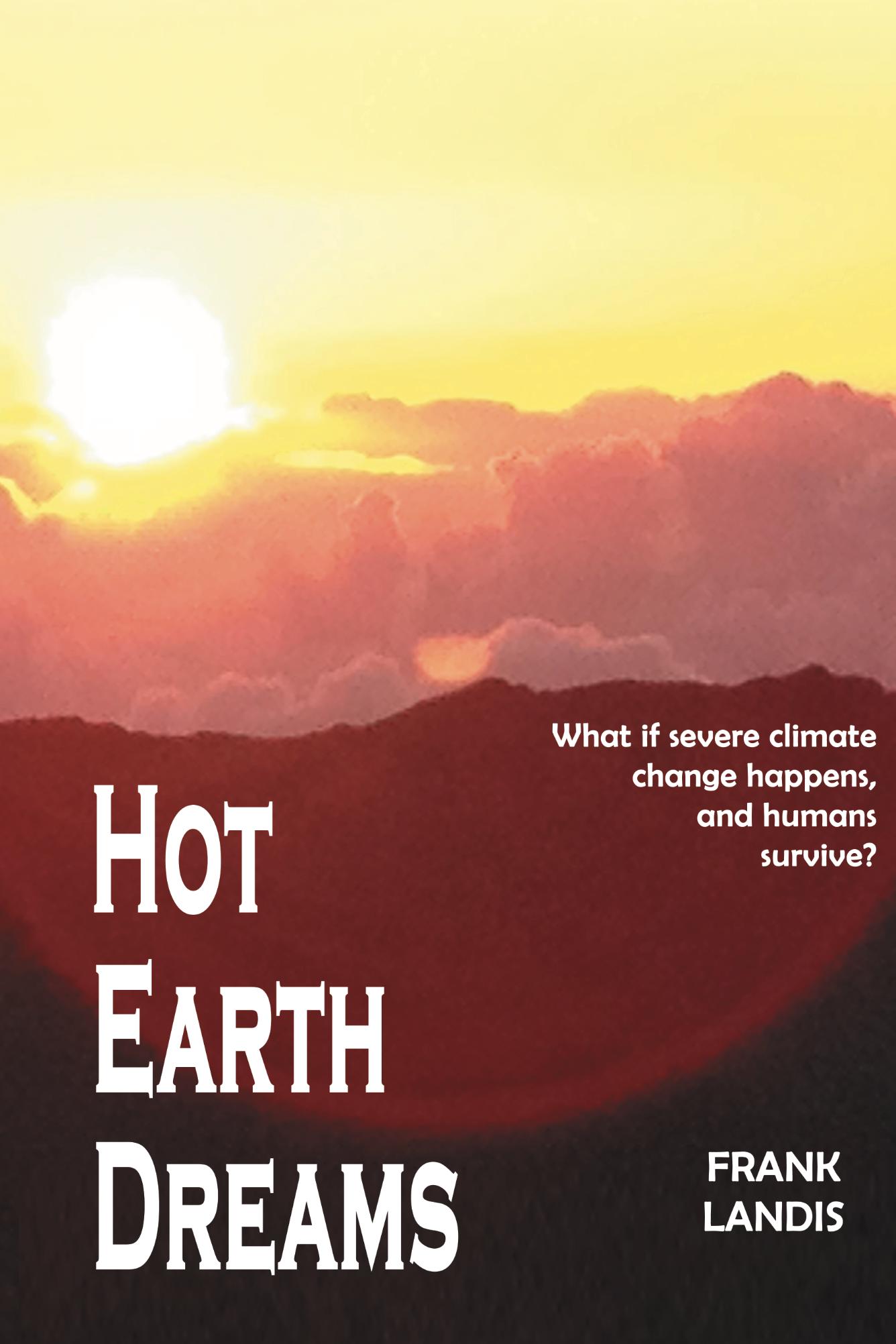
Well, I was hoping to get that book out by now, but thanks to life intervening and Ol’ BigMuddy doing something interesting with the formatting, not to mention another round of copy editing, I’m planning to release it November 15, although that’s a soft deadline. The release will be a paperback version and a Kindle version, both available on Ol’ BigMuddy, in as many markets as I can get it into.
To whet your appetites, here’s a pdf sample from the paperback. Enjoy!
(update: you can see where to buy it here)
Filed under: commons, economics, Speculation, sustainability | Tags: commons, Elinor Ostrom, Free markets, Tragedy of the Commons
This is a short post inspired by a comment train on Charles Stross’ Antipope.
The question at the time was whether Nobel prizes are sexist, with more women than men getting the award. My anecdote was about the late Dr. Elinor Ostrom, who received the 2009 Nobel Economics prize for her work showing that Commons could indeed work. I discussed this a couple of years ago in a post about whether to markets could be managed as commons, which was a topic I was playing with at the time.
The previous posts lists eight principles that Dr. Ostrom found worked to allow members of a commons to successfully manage that commons. This goes against the idea of the Tragedy of the Commons (Wikipedia article link). I hear this most often referred to today by people who refer to the idea as a reason why commons should be privatized and market forces should be used to manage them, because otherwise they’re doomed. This isn’t quite what Hardin meant, and later on, he noted that he should have called it “The Tragedy of the Unregulated Commons.”
Getting at the question of whether the economics Nobels are sexist, I’d point to three lines of evidence:
1. To date, Dr. Ostrom is the only woman who has received an economics Nobel.
2. As I recall from the references, she caught a lot of flack when she received the award. She was derided as a sociologist, not a real economist, and some said that there were other men who were more deserving who were overlooked that year.
3. More to the point, men in particular still refer to the tragedy of the commons as if it’s a real thing. When confronted with Ostrom’s work, they insist that they mean something that’s real, which is a common defense against any such attack.
Here’s the thing: everyone agrees that unregulated commons can be looted. But this statement is also true for any unregulated market (think illegal drugs, human trafficking, poaching…), and it’s true for unregulated capitalism (think illegal drugs, human trafficking, poaching…). If we’re going to use the term “Tragedy of the Commons” as if it’s real, I’d argue that it’s only fair to talk about “The Tragedy of Capitalism” and “The Tragedy of Markets” as the reason why we should manage as many common resources as commons, rather than having them under private, inequitable control that runs them into the ground for the profit of the few. It’s just as true.
However, I don’t expect anyone to be fair, so the better option is to realize that the Tragedy of the Commons is a term that needs to be retired. The reason for retiring it is that self-regulated commons can work very well. Properly designed and regulated commons are a perfectly reasonable management system for everything from community forests to large scale groundwater basins, and eliminating the “TotC” phrase from our vocabulary frees us up to explore these management options where they’re appropriate. Given how important things like groundwater management are for keeping civilization running, I’d suggest that every good management system should be an acceptable option for managing them, and that includes commons.
Filed under: science fiction, Speculation | Tags: Fermi Paradox, Interstellar Travel, science fiction
Wow, didn’t realize I hadn’t posted in so long. I got busy with life and writing. Here’s something that I was originally going to put in the book, but it doesn’t really fit there. It’s thoughts about how human experience might explain the Fermi Paradox.
Now, for one thing, I don’t think it’s much of a paradox. After all, as XKCD explained in “Alien Astronomers”, it would be almost impossible for a radio telescope on Alpha Centauri to pick up our radio broadcasts. Military and research radar beams, yes, but not our ordinary chatter. One critical point is that broadcasting powerful radio signals takes a lot of energy, and that’s expensive. If it’s more cost effective to be efficient, then we’ll do it (as we have with broadcasting and intercontinental cable) and that makes us more radio-invisible. At our current level of technology, the galaxy could be brimming with civilizations, and we couldn’t see them, nor could they see us. Being blind isn’t much of a paradox.
Of course, the question is, why aren’t the aliens here already? If they’ve had even a million years’ more civilization, shouldn’t they have starships? Well, here’s another answer: starships are expensive, because at high speeds, they’re a drag. This came out of an arXiv paper (link), and the pop-sci version on Io9. The basic point is that for a starship traveling at high speeds runs into photons from the Cosmic Microwave background, and if it’s traveling fast enough, those collisions generate about 2 million joules/second in energy, which seems to act like frictional energy slowing the ship down. So not only does a starship have to hit those high speeds, it has to continuously generate more thrust as particle collisions slow it down. You can’t just accelerate a starship and coast to another star, except at really low speeds which would take thousands of years to get between stars. Do you know how to make a machine that continuously functions for thousands of years? That’s a non-trivial challenge. So there’s answer #2 for the Fermi Paradox: space isn’t slick enough to coast. At high speeds, the CMB acts like an aether and causes friction, requiring continuous acceleration.
Answer #3 for the Fermi paradox is the one I was going to stick in my book, which is about what the Earth will look like if the worst predictions of climate change come to pass, and humans don’t go extinct. This scenario could also explain the Fermi Paradox. Basically, in the roughly 500 years of the Industrial Revolution (and yes, I know that it was much longer in the run-up), we’ll have burned through all our fossil fuels, our available radioactive elements, minable elements from aluminum to phosphorus, groundwater, and so forth. After we use up all the cheap energy and readily available raw materials, we’ll be stuck recycling everything using solar and gravitational energy (or biofuels, PV, wind turbines, and hydropower, if you want mechanisms) for hundreds of thousands to millions of years, until the Earth can generate more fossil fuels. Perhaps we had a brief window in the 1970s when, if we’d gone for it and known what we were doing, we *might* have put a colony on the moon. Highly unlikely, but possible, and the chances of that colony surviving would be fairly low. We can’t get to Mars now (due to little problems like radiation in interplanetary space), and if we don’t get nuclear fusion to work real soon now (the 1970s would have been a good time for that breakthrough, too), we’re going to be downsizing civilization pretty radically in the coming century, rather than going to Mars or beyond.
Let’s assume that humans are relatively normal for sapient species, in the sense that we got our rapid spurt of technological advance by using up all the surplus energy that their planetary biosphere had squirreled away for the last 300 million years. By the time we understood the true state of our world and the galaxy, we also realized we were in trouble, because we were already going into a time of overconsumption and too-rapid population growth. By the time we become technologically sophisticated enough to possibly colonize another planet, we won’t have the resources to do so. Indeed, we’ll be forced to use any terraforming techniques we work out on the Earth just to keep it habitable. Once we’ve survived this peak experience, we’ll be a mature civilization (or more likely civilizations), but we’ll also be radio-quiet, highly resource efficient, and totally incapable of interplanetary travel, let alone interstellar voyaging.
That’s the #3 answer to the Fermi Paradox: scientific development marches in tandem with resource extraction, and it’s impossible to become sophisticated enough to colonize another planet without exhausting the resources of the planet you’re on. It’s possible that the universe is littered with ancient sophisticated civilizations that have already gone through their peak resource crisis and are quietly going on with their lives, stuck on their planets, kind of like kids who went to college to change the world and got stuck with crushing college debts and jobs that weren’t their dreams. In our case, we’ve still got a billion years or so left before Earth becomes totally uninhabitable, so it’s not horrible to be “stuck” here, on the one planet we’re evolved to live on. It’s just sad for those of us who thought that Star Trek looked like a really cool way to live.
 Putting the life back in science fiction